Love and Forgiveness – A Free Sample Chapter
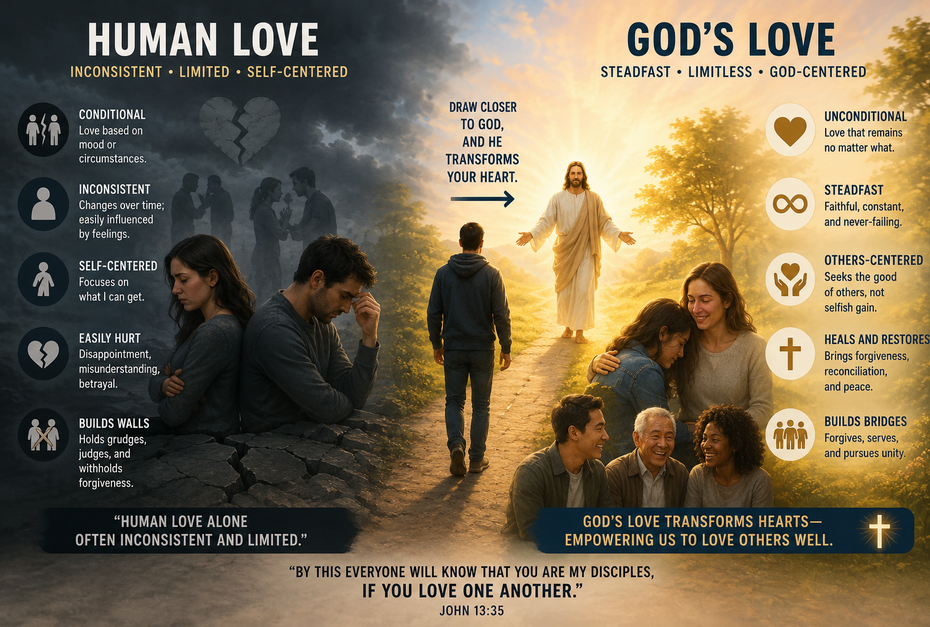
1. God’s Design for Relationships
From the very beginning, relationships were part of God’s plan. “It is not good for the man to be alone” (Genesis 2:18).
Whether in marriage, family, friendships, or communities, relationships are meant to reflect God’s character: love, unity, and grace.
Jesus summarized the entire law in relational terms:
“‘Love the Lord your God with all your heart and with all your soul and with all your mind.’ This is the first and greatest commandment. And the second is like it: ‘Love your neighbour as yourself.’” (Matthew 22:37–39, NIV)
Loving God and loving others are inseparable. Yet in practice, relationships often bring our greatest pain. Misunderstandings, betrayal, unmet expectations, and selfishness strain the bonds that should nurture us.
2. Love as the Foundation
Paul calls love the supreme virtue:
“Above all, clothe yourselves with love, which binds everything together in perfect harmony.” (Colossians 3:14, ESV)
Love in Scripture is not shallow emotion but sacrificial commitment. The Greek word agape describes a love that chooses the good of the other, even at personal cost.
• In marriage, love means putting your spouse’s needs before your own (Ephesians 5:25).
• In family, love means patience with imperfections and support in weakness.
• In friendships, love means loyalty in both joy and sorrow (Proverbs 17:17).
• In community, love means carrying one another’s burdens (Galatians 6:2).
Love is the soil in which all healthy relationships grow. Without it, even duty or obligation quickly turns cold.
3. The Challenge of Forgiveness
But what about when we are wronged? What about betrayal, harsh words, neglect, or abuse of trust? Jesus addresses this directly:
“Be kind and compassionate to one another, forgiving each other, just as in Christ God forgave you.” (Ephesians 4:32, NIV)
Forgiveness is not excusing sin or minimizing pain. It is releasing the offense to God, refusing to let bitterness poison your heart.
• Forgiveness is commanded: Jesus tells us to forgive “seventy times seven” (Matthew 18:22).
• Forgiveness reflects Christ: We forgive because He forgave us first (Colossians 3:13).
• Forgiveness brings freedom: Unforgiveness is a prison. Forgiveness unlocks the door.
This does not mean ignoring boundaries. Healthy forgiveness can coexist with wisdom, especially in toxic or abusive relationships. But forgiveness keeps the heart soft while boundaries protect the soul. Note that Forgive and Forget is NOT in the Bible. In an Abusive Relationship, forgive BUT set safe healthy boundaries for the future.
4. Practical Tools for Healthy Relationships
1. Practice Active Listening
James 1:19 urges, “Everyone should be quick to listen, slow to speak and slow to become angry.”
Listening validates others, reduces defensiveness, and opens doors for healing.
2. Pray for Difficult People
Jesus commands, “Love your enemies and pray for those who persecute you” (Matthew 5:44).
Prayer softens our hearts and invites God to work where we cannot.
3. Set Healthy Boundaries
Proverbs 4:23 teaches, “Above all else, guard your heart, for everything you do flows from it.”
Boundaries prevent emotional burnout and clarify expectations in relationships.
4. Seek Reconciliation When Possible
Romans 12:18 says, “If it is possible, as far as it depends on you, live at peace with everyone.”
Not every relationship will be restored, but peace is possible when we pursue humility and grace.
Biblical Case Study: Joseph and His Brothers
Few biblical stories highlight forgiveness as powerfully as Joseph’s. Betrayed by his brothers, sold into slavery, and imprisoned unjustly, Joseph had every reason for bitterness. Yet years later, when given power over them, he said:
“You intended to harm me, but God intended it for good to accomplish what is now being done, the saving of many lives.” (Genesis 50:20, NIV)
Joseph’s forgiveness didn’t erase the pain, but it reframed the story in God’s larger plan. He chose mercy over revenge, and in doing so, reflected God’s heart.
Reflection Questions
1. Where in my life am I struggling to love as Christ commands?
2. Is there someone I need to forgive—not to excuse their actions, but to release my heart to God?
3. What boundaries do I need to establish in a strained relationship to honour God and protect my well-being?
4. How can I begin practicing active listening and compassionate communication this week?
Closing Prayer
Lord, thank You for loving me with an everlasting love. Teach me to love others as You have loved me, and to forgive as You forgave me through Christ. Where bitterness has taken root, uproot it with Your grace. Where relationships are strained, guide me in humility and wisdom. Help me live in harmony, clothed in love, that my life may reflect Your heart. In Jesus’ name, Amen.
Every Chapter contains a Closing Prayer similar to the one in this Free Sample Chapter.
We hope you have enjoyed this Free Sample Chapter on Love and Forgiveness – It is representative of the rest of the book.